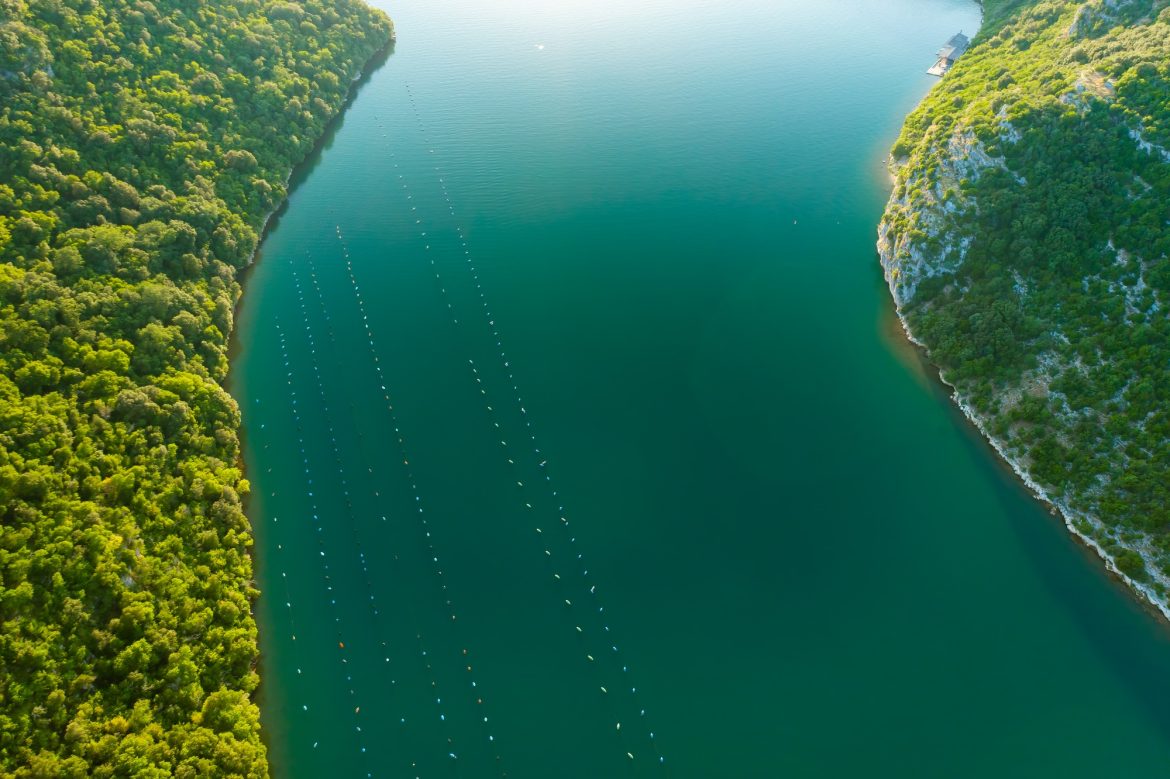
A unique opportunity to help restore the Mar Menor lagoon is being offered tomorrow in Lo Pagán, San Pedro del Pinatar. The scientific project, RemediOS Two, is hosting an informative meeting to attract volunteers for the cultivation of flat oysters. This initiative aims to filter the eutrophicated waters of the lagoon by promoting a significant harvest of bivalves. The event runs from eleven in the morning to one in the afternoon at the Félix Martínez Bermúdez Nautical Activities Centre.
Participants in this citizen science project will receive a mesh basket containing oyster seeds. Each ‘adoptive family’ will be responsible for maintaining and measuring the growth of their oysters, which will be submerged in the harbour to allow them access to nutrient-rich water. Volunteers will periodically visit their assigned baskets to record growth measurements and provide basic care.
The RemediOS Two project builds on its predecessor, RemediOS One, which focused on obtaining flat oyster seeds from local breeding areas. This initiative is a collaborative effort, involving the Spanish Institute of Oceanography, the Association of Naturalists of Southeast Spain, the Autonomous Community, the Estrella de Levante Foundation, and the Biodiversity Foundation under the Ministry for Ecological Transition.
Flat oysters, known scientifically as Ostrea edulis, are bivalve molluscs that filter small organisms and particles from the water. An adult flat oyster can filter nearly one hundred litres of water daily. It is estimated that a population of one hundred thirty-five million oysters, the size of historic populations in the Mar Menor, could filter the lagoon’s entire water in just one hundred fifty days, making this project crucial for ecological restoration.
This article was written with AI assistance and reviewed by a human editor before publication.