Listeners:
Top listeners:
00:00
00:00
volume_up
chevron_left
-
 play_arrow
TKO Radio Love Life... Love Music... Love TKO!
-
 play_arrow
TKO Gold Classic Gold Easy Listening on The Costa Blanca
-
 play_arrow
TKO 70s
-
 play_arrow
TKO 80s
-
 play_arrow
TKO 90s
-
 play_arrow
Weekend Wakeup TKO Radio
-
 play_arrow
Early Breakfast TKO Radio
-
 play_arrow
Club Life TKO Radio
-
play_arrow
Airplay Rewind TKO Radio
-
play_arrow
Something For The Weekend TKO Radio
Medieval Shipwreck Unearthed in Barcelona Excavations

Archaeologists in Barcelona have made a remarkable discovery, unearthing the partial remains of a ship thought to date back to the fifteenth or sixteenth century. The ship, provisionally named ‘Ciutadella I’, was found during excavations for a future underground mobility centre at the site of the old Mercat del Peix, over five metres below sea level. Measuring approximately ten metres in length and over three metres wide, it reveals important insights into medieval maritime construction techniques.
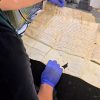
The vessel’s construction is indicative of the Mediterranean shipbuilding style, known as ‘frame construction’, which spread across Europe during this period. However, the condition of the wood has left it fragile after centuries submerged in water. To prevent degradation, archaeologists have adhered to meticulous conservation protocols, keeping the artefacts partially covered with the original sand.
Coordinated by the Barcelona Archaeological Service in collaboration with various research institutions, excavations commenced in March twenty twenty-three, led by specialists from Arqueòlegs.cat. Initial work has involved scientific sampling, documentation, and creating three-dimensional models using photogrammetry techniques.


Aside from the ship, the excavation has revealed significant organic materials such as whole pine cones and hazelnut shells, enhancing the understanding of the historical context. Excavations have also uncovered structures dating back to the Spanish Civil War and the eighteenth century, providing a continuous narrative of the area’s rich history. The ‘Ciutadella I’ discovery not only enriches our knowledge of medieval navigation but also highlights the changing coastline of Barcelona over centuries.
This article was written with AI assistance and reviewed by a human editor before publication.