Listeners:
Top listeners:
00:00
00:00
volume_up
chevron_left
-
 play_arrow
TKO Radio Love Life... Love Music... Love TKO!
-
 play_arrow
TKO Gold Classic Gold Easy Listening on The Costa Blanca
-
 play_arrow
TKO 70s
-
 play_arrow
TKO 80s
-
 play_arrow
TKO 90s
-
 play_arrow
Rob Charles In The Morning TKO Radio
-
 play_arrow
Early Riser TKO Radio
-
 play_arrow
Songs That Don't Get Played On The Radio Any More TKO Radio
-
play_arrow
Airplay 40 TKO Radio
-
play_arrow
Paul Baker's Weekender TKO Radio
New Discoveries of Giant Spinosaurids in Soria

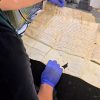
A recent discovery in Golmayo, Soria, has revealed a giant spinosaurid, the largest known carnivorous dinosaur in the Iberian Peninsula, measuring up to twelve metres in length. This significant find includes teeth, vertebrae, and various skull fragments, identified by a team led by researchers Erik Isasmendi and Xabier Pereda from the University of the Basque Country. The fossils were originally collected by amateur palaeontologists, the Meijide-Fuentes family, between two thousand and two thousand and ten.
The fossils, now housed in the Numantino Museum, were scrutinised by Isasmendi as part of his doctoral thesis, contributing to a scientific study published alongside colleagues from the University of La Rioja and the Bavarian State Museum of Paleontology and Geology in Germany. Their findings highlight the unique anatomy of the spinosaurids, known for their long, low skulls and conical teeth similar to modern crocodiles. Some species also exhibit distinctive dorsal sails, akin to fins on their backs.
This groundbreaking discovery enhances our understanding of the diversity of theropods during the Early Cretaceous period, around one hundred and twenty-five million years ago, on the Iberian Peninsula. Researchers believe that the giant spinosaurid from Soria could represent an undescribed form, though further fossil recovery will be necessary to verify if it indeed constitutes a new species.


In addition to the giant spinosaurid, several isolated teeth have been classified, possibly belonging to another theropod unrelated to spinosaurids, currently designated as an indeterminate tetanuran. This significant find is set against the backdrop of Golmayo’s rich geological formation, where various fossils of crocodiles, turtles, sharks, molluscs, crustaceans, and plant remains have also been documented.
This article was written with AI assistance and reviewed by a human editor before publication.