Listeners:
Top listeners:
00:00
00:00
volume_up
chevron_left
-
 play_arrow
TKO Radio Love Life... Love Music... Love TKO!
-
 play_arrow
TKO Gold Classic Gold Easy Listening on The Costa Blanca
-
 play_arrow
TKO 70s
-
 play_arrow
TKO 80s
-
 play_arrow
TKO 90s
-
 play_arrow
The Light Lunch TKO Radio
-
 play_arrow
Rob Charles In The Morning TKO Radio
-
 play_arrow
Early Riser TKO Radio
-
 play_arrow
Songs That Don't Get Played On The Radio Any More TKO Radio
-
play_arrow
Airplay 40 TKO Radio
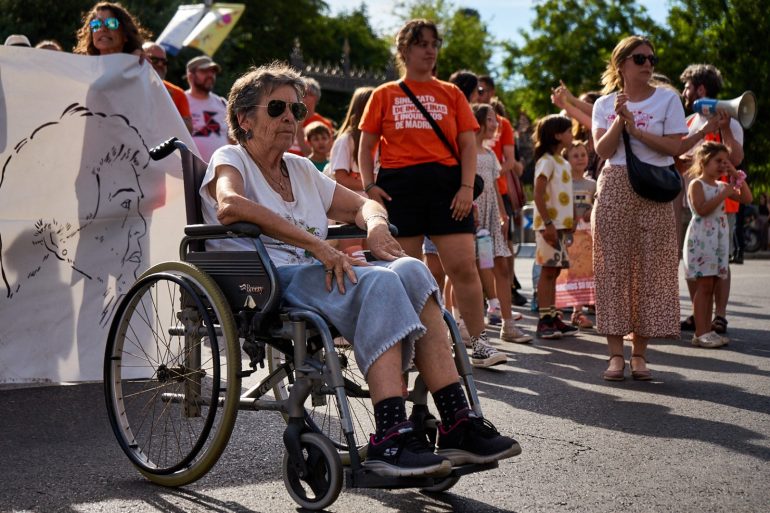
More than twenty million Spaniards face inadequate social services

A report by the Association of Directors and Managers of Social Services reveals that over twenty million people in Spain, which is forty two percent of the population, are relying on inadequate social services. This highlights a pressing need for reform in the delivery and structure of these services, as many regions show stark differences in quality and accessibility.
The Index DEC, an annual study assessing social services since two thousand twelve, ranks Castilla y León, the Basque Country, and Navarra as having the best services, while the Region of Murcia, Cantabria, and the Community of Madrid are deemed to have the weakest services. The report emphasizes the importance of decentralizing social services to better meet the needs of citizens across the country.
While the overall coverage of benefits has improved, concerns were raised regarding the insufficient development of home assistance and day centres, which are crucial for individuals requiring support. The report noted that the financial commitment remains limited, with the ratio of GDP allocated to social services decreasing progressively, despite an increase in spending per inhabitant.


The Association stated that there are unacceptable inequalities in service availability and quality among different regions, leading to significant disparities in the time taken to receive assistance. The findings call for a commitment to equalize social welfare provisions across Spain, aiming for fair access to social services as a fundamental right.
This article was written with AI assistance and reviewed by a human editor before publication.